

The Henry E. Huntington Papers and Related Collections are the materials of and about Henry E. Huntington, family, staff, and business associates. These collections offer an insight into lives of the Huntingtons and the San Marino estate, as well as the economic and cultural emergence of Southern California in the 20th century. The following biographies in the next section represent family members and related figures who have a notable presence in the collections.
The Henry E. Huntington papers (mssHEH) will be organized into approximately 470 boxes, 1,060 volumes, and 100 miscellaneous items (rolled items, oversize folders, individual items, and objects) totaling around 540 linear feet. The collection mainly consists of the personal and business papers of Henry Huntington, and it also contains Huntington family material (including the Holladay and Metcalf families). Huntington's business papers mainly involve his activity in the Huntington Land and Improvement Company, Pacific Electric Railway Company, and other companies he owned, as well as Southern California real estate, the founding and history of the Huntington, and his purchases of art and books. This collection also material related to Arabella Huntington, Collis P. Huntington, and Henry Huntington's time in New York.
 Henry Edwards Huntington (1850-1927), American railroad and land developer, collector and founder of The Huntington was born in Oneonta, New York, to Solon Huntington and Harriet Saunders Huntington. In Oneonta, Henry grew up in a comfortable and enriching environment, and he memorialized his fondness of the place when he named a major stop on his Pacific Electric railway Oneonta (at intersection of Fair Oaks and Huntington Ave.). His business ventures started from humble beginnings. In a letter to his close friend recounting early life in the 1850s, Huntington writes that at the age of eight or nine years, his “first great speculation” was a candy, peanuts, and lemonade stand that he opened when a local circus visited his hometown. In 1870, Henry Huntington went to New York City and found work through the guidance of his uncle Collis P. Huntington, an American industrialist and railway magnate (1821-1900). In 1873, he married Mary Alice Prentice (1852-1916), who he later divorced in 1906. Together, they had four children: Howard Edward (1876-1922); Clara Leonora Huntington (1878-1965); Elizabeth Vincent Metcalf (1880-1965); and Marian Prentice Huntington (1883-1973). After working for several railroad companies, in 1892, Henry Huntington moved to San Francisco to join his uncle, who was president of the Southern Pacific Company. After Collis Huntington's death in 1900 and Henry Huntington's purchase of the late James de Barth Shorb's ranch in 1902 (now his San Marino estate), Huntington moved his business interests to the Los Angeles area, organizing the Pacific Electric Railway Company, the Huntington Land and Improvement Company, and other real estate and industrial development enterprises. He purchased the Mt. Lowe Railway in 1900, and in 1902, the Los Angeles and Pasadena Electric Railway Company.
He was a very industrious, yet complicated figure that balanced his anti-strike/union sentiments with his ardent beliefs in treating workers fairly. He considered unions to be the work of agitators and outside troublemakers. On the other hand, he held firmly to his business philosophy of being generous to those he deemed to be hard workers. In 1910, Los Angeles Railway Company Employees presented a silver cup to Huntington to express their approval of his leadership.
By 1903, Huntington owned more than 8,000 acres of land throughout Southern California. While Huntington had been a collector of books and art earlier in his career, by 1908 he began collecting books, art, and manuscripts at a much greater scale. Additionally, he began devoting his attention to building up his San Marino ranch and gardens. A couple of his early library acquisitions set him up to become one of the most important book collectors in the United States. In 1911, Huntington purchased the E. Dwight Church Library which included Benjamin Franklin's Autobiography, and in that same year obtained the Gutenberg Bible in the Robert Hoe sale. In 1917, Huntington purchased the Bridgewater Library from John Francis Granville Scrope Egerton, 4th Earl of Ellesmere, which included the prized Ellesmere Chaucer. In Paris, France, July 1913, Huntington married Arabella Huntington, the widow of his uncle, and an avid collector herself; she had a son, Archer (1870-1955), from a previous relationship. Not shortly after, in 1919, Henry and Arabella Huntington signed a trust document that turned their private estate into a public institution, and in 1922 Huntington signed a deed that transferred ownership of his books, manuscripts, art, and the San Marino Ranch to the Library Trustees. After an illness and traveling to New York City for surgery, Henry Huntington died in May 1927 at the age of 77. Both Henry and Arabella Huntington are buried on the property in San Marino in a mausoleum designed by esteemed American architect, John Russell Pope. The Huntington opened to the public in 1928.
More information on Huntington's collecting history can be found in Sherburn, George. “Huntington Library Collections.” The Huntington Library Bulletin, no. 1 (1931): 33–106.https://www.jstor.org/stable/i292279.
 Arabella Duval Huntington (1850-1924) was an art and luxury object collector, philanthropist, wife of Henry E. Huntington and co-founder of The Huntington. According to her correspondence, she was born on June 1, 1850, possibly in or near Union Spring, Alabama to Richard Milton Yarrington and Catherine James Simms. She spent most of her youth in Richmond, Virginia. When her father passed away in 1859, her mother ran a boarding house in Richmond to sustain the family. In the middle of the 1860s, she traveled to New York in her teens with John Archer Worsham (1828-78). In New York, she lived in close proximity to Collis Huntington (1821-1900) and correspondence suggests that Arabella and Collis met as early as 1867. She became pregnant in July 1869 and eventually gave birth to Archer Milton (1870-1955). It is not clear who the father is, as she claimed to have been married to Worsham, whereas evidence suggests she was not. On the other hand, Archer bears physiognomic resemblance to Collis. In 1884, Arabella and Collis got married. Collis dies in 1900, and she builds up the considerable wealth she inherited from Collis through various means, notably her talent for property speculation.
In 1903, to court Arabella, Henry E. Huntington deeply involved her in the construction his San Marino residence, where she was tasked with working with the architect, Myron Hunt, furnishing the house, and acquiring art for his collection. In the first decade of the 1900s, she began a purchasing campaign that would lead to her being regarded as one of the preeminent American art collectors, even in competition with J.P. Morgan’s collection. On one of her trips to Paris, London and Berlin in 1902, she spent a total of $75,000 ($1,865,000 now) which was the largest amount ever declared by a traveler in the port of New York up until that point. In 1907, she made notable purchases from the Kann collection, which included acquisitions of Aristotle with a Bust of Homer and Hendrickje Stoffels by Rembrandt, Willem Coymans and Dorothea Berck by Frans Hals and Virgin and Child by Roger van der Weyde. In addition to her lavish purchases, she also made large gifts to philanthropic organizations. Some of the donations included a $250,000 ($6.5 million) gift to Harvard Medical School for a laboratory, $100,000 ($2.5 million) to constitute the Collis P. Huntington Fund of the General Memorial Hospital for the Treatment of Cancer and Allied Diseases in New York (now called the Memorial Sloan-Kettering Cancer Center, and $20,000 ($500,000) to build “Huntington Hall,” a girls dormitory at Tuskegee University. In July 16, she and Henry got married, but, notably, their union did not unite their financial fortunes. Instead, their finances were to remain separate. Now married to Henry, she continued to advise him on art acquisitions, general luxury collecting, and philanthropic projects. In 1924, she passed away due to health complications.
Larger collections of Arabella Huntington's archival materials can be found at the Syracuse University library and the Smithsonian Archives.

Collis P. Huntington (1821-1900) was an influential American railroad and shipbuilding magnate, art collector, and philanthropist. He was born on October 22, 1821, in Harwinton, Connecticut, as the sixth of nine children to Elizabeth and William Huntington. He was educated until age fourteen when his father could no longer finance his education. Distanced from formal education, Collis went to apprentice under a neighboring farmer and the following year to a local grocer. By sixteen, he moved to New York with $175 and set himself up as a traveling salesman. In 1844, Collis invested his savings into a hardware store his older brother Solon established in Oneonta, New York; he and his brother signed a partnership contract launching the S. & C. P. Huntington firm. The same year, Collis married Elizabeth Stillman Stoddard and having no children of their own, they adopted Elizabeth’s niece, Clara Prentice. In 1849, Collis traveled to California to capitalize on the economic opportunity of the Gold Rush. He started a hardware business in Sacramento that Mark Hopkins joined in 1855, and together they created the hardware firm, Huntington & Hopkins. The large profits generated by the hardware store amassed him a small fortune, which, by 1861, contributed to Collis playing a leading role in building the first transcontinental railroad. During this year, Collis Huntington, Mark Hopkins, Leland Stanford, Charles Crocker and others formed the Central Pacific Railroad Company. By May 1869, the Central Pacific and the Union Pacific connected in Utah, completing the first transcontinental railroad. In December 1862, Huntington moved to New York City to manage the finances, land acquisitions, legal cases, and lobbying for the Central Pacific. Collis continued to finance and build up the Southern Pacific system in the late 1870's, and by 1883, the completed railroad system ran from California to New Orleans. The Central Pacific and Southern Pacific systems were eventually consolidated into one transcontinental railroad which managed 9,000 miles of tracks. In 1890, Collis succeeded Leland Stanford as president of the Southern Pacific Company, and shortly after in 1892, his nephew, Henry E. Huntington, became vice-president of the company and continued to build upon Collis’ railroad empire.
In addition to a highly successful businessman, Collis was also an ardent abolitionist and philanthropist. He established the Huntington Industrial Works at Hampton Normal and Agricultural Institute, which was one of the first schools dedicated to educating African American youths. Additionally, he supported the Chapin Home for the Aged and Infirm, which he contributed funds to from 1872 until the end of his life. He personally bequeathed $25,000 ($665,000) to it in his will of 1897. Beginning in 1874, he was a member of the Union League Club of New York, founded in 1863 to raise money to support the Union war effort and abolitionist causes. The Union League was also involved in the foundation of the Metropolitan Museum of Art, and Collis often donated funds for the museum’s acquisitions and eventually donated his own collection to the museum. In 1883, his wife Elizabeth Huntington (1823 – 1883) dies, and in 1884, he married Mrs. Arabella Duval Yarrington Worsham (1850-1924) and adopted her son, Archer Milton (1870-1955). Collis P. Huntington died suddenly on August 13, 1900, at the age of seventy-nine and is now buried in Woodlawn Cemetery in New York City.
A more comprehensive collection and guide to Collis Huntington's life can be found at the Syracuse University library.
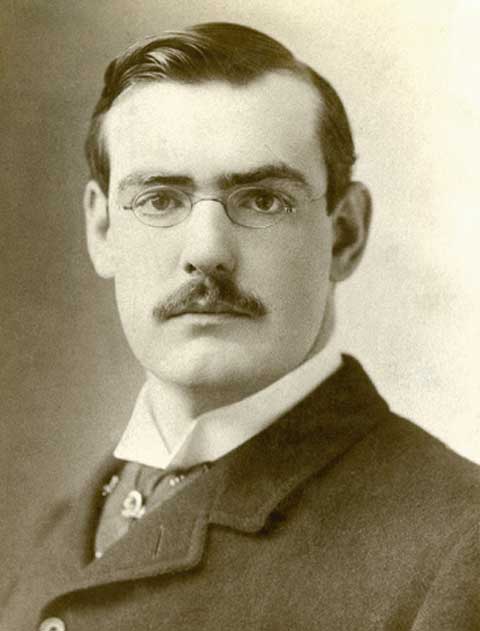 Archer Huntington (1870-1955) was a scholar, poet, philanthropist, and an esteemed collector of Hispanic art. He was born Archer Milton Worsham in New York City on March 10, 1870. He took the surname Huntington after his mother, Arabella D. Worsham married Collis P. Huntington in 1884, who adopted Archer as his only son. Archer was educated by the best private schools and personal tutors in New York, and he benefitted from the experiences and education afforded by foreign travel. He discovered his passion for Spain and Hispanic culture after encountering George Borrow's book, The Zincali; or, An Account of the Gypsies in Spain on his first trip to Europe in 1882. On this trip, he visited the National Gallery in London and the Louvre in Paris which began his lifelong love of the arts and museums. These early experiences would form the foundation of his lifelong pursuit of establishing a "Spanish Museum."
In 1892, Archer made his first trip to Spain, then in the summer of 1895, he married his cousin, and first wife, Helen Gates Criss. The rest of the decade was spent travelling, collecting, publishing around forty facsimiles of books from his personal collection and creating his museum. Following the death of his father, Collis, in 1900, Archer inherited the resources to begin a serious collection of art. In January 1902, he purchased the superlative library of the Marquis of Jerez de los Caballeros, the finest private collection of early Spanish literature at that time. He was aware that the acquisition of this invaluable library would inevitably become a controversy in Spain, yet in general, Archer was a rare collector of his day in that he supported cultural patrimony. When he began to collect Spanish paintings in the 1890s, the majority of his acquisitions came from major dealers in Paris, London, and New York, but not in Spain.
In 1904, he executed the Foundation Deed for The Hispanic Society of America in New York City. Today, it houses his extensive collection of Hispanic paintings, decorative art, books, manuscripts, maps, prints, and photographs. Huntington continually traveled to Europe to build his collection up until World War I when he eventually stopped his collecting pursuits to focus on forming a professional staff to conserve, research, and catalog his collections. He eventually divorced his first wife in 1918 which led to a depressive period in his life where he retreated from his public commitments to various societies. In 1923, he married his second wife, sculptor Anna Vaughn Hyatt, whose works are displayed on the grounds of The Hispanic Society, including an equestrian sculpture entitled "The Cid."
In his later years, Archer donated generously to various museums and environmental preserves. He presented collections of art and antiques to museums such as the Legion of Honor of the Fine Arts Museums of San Francisco, the Yale University Art Gallery, and The Metropolitan Museum of Art. Additionally, he donated large tracts of land to museums, parks, and nature preserves. Some of his notable donations included 15,000 acres to the Syracuse State University of New York College of Environmental Forestry in 1932, his private residence in New York City, 1089 5th Avenue, to the National Academy Museum and School in 1940, and 1,017 acres in Redding to the State of Connecticut for the Collis P. Huntington State Park. Archer passed away in Connecticut, on December 11, 1955.
A more comprehensive collection and guide to Archer Huntington's life can be found at Syracuse University library and The Hispanic Society of America.
 Anna Vaughn Hyatt Huntington (1876-1973), an award-winning American sculptor, was born in Cambridge, Massachussets on March 10, 1876. She was raised in an eclectic household with her father, Alpheus Hyatt, a noted paleontologist, naturalist, and Harvard professor, her mother, Audella Beebe Hyatt, an artist specializing in watercolors, and her sister, Harriet, a sculptor. She trained under H.E. Kitsen of Boston and at the Art Students' League in New York. Additionally, she received feedback from notable sculptors such as Gustav Borglum.
Starting from1898, she began to publicly exhibit her work, and by 1906, she established her reputation as a skilled sculptor of animals. She lived in Europe from 1906 to 1908 and later in 1910. While in France, she was commissioned by an American institution to produce a statue of the French military hero Joan of Arc. Her “Jeanne d’Arc” was set on Riverside Drive in New York City and became the first statue created by a woman artist to be displayed in the city. She eventually returned to America where she continued working on many commissions, with several of a monumental scale.
In 1923, she married Archer Milton Huntington as his second wife. Despite her battle with tuberculosis beginning in 1927, Anna was active in producing and show her work after their marriage. Due to her disease, the couple decided to move south to the warmer climates of South Carolina. The couple purchased thousands of acres in Murrells Inlet, South Carolina, which is the property they used in 1931 for the foundation of the Atalaya and Brookgreen Gardens, the first public sculpture garden in the U.S. In 1937, the Huntingtons moved from New York City to Haverstraw, New York, and then finally to an estate and farm in Connecticut in 1940. She continued sculpting and her art practices until illness forced her to stop in 1972. She died shortly after in 1973.
A comprehensive collection and guide to Anna Hyatt Huntington's life can be found at the Syracuse University library.
 Howard Edwards Huntington (1876-1922) was born in St. Albans, West Virginia, one of four children of Henry Edwards Huntington and his first wife, Mary Alice Prentice Huntington. He started working in 1894, at age 18, in the engineering department of the Southern Pacific Railroad Company. After six years, he decided to go to college and was accepted at Harvard University. He later became an executive in the Los Angeles Railway Company and the Pacific Electric Railway Company. Howard Huntington married Leslie Thayer Green (1880-1962) in Berkeley, California in 1905, and they had six children: Elizabeth "Liz" (born 1906), Margaret (born 1908), Harriet (born 1910), Howard Edwards Huntington Jr. (born 1913), Leslie Alice (born 1916), and Henry Edwards "Ted" Huntington II (born 1921). The family lived in San Marino and then in the Oak Knoll area of Pasadena. Howard Huntington died of cancer in 1922, at age 46, in Pasadena. His widow, Leslie Thayer Green Huntington, married James R. Brehm in 1924.
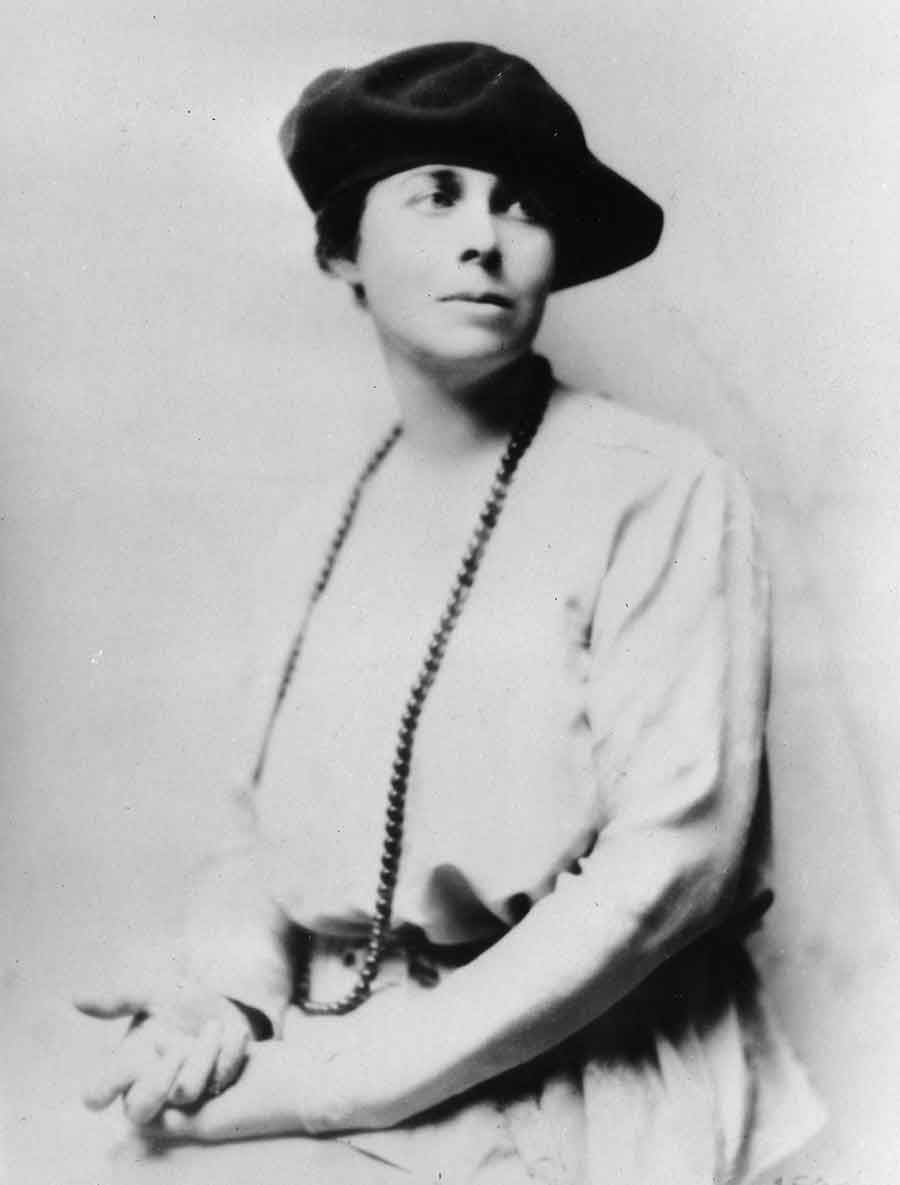 Clara Huntington (1878-1965) was born in Oneonta, New York on February 2, 1878. Clara was the daughter of Henry E. Huntington and Mary Alice Prentiss. After Clara's divorce from Gilbert Perkins in 1915, she took back the name Huntington and decided to pursue a career in art. Her studies began in San Francisco, California in the 1890s. In the 1920s and 1930s, she studied sculpture at the San Francisco Art Institute, under Leo Lentelli in New York, and under Italy's official state sculptor Arturo Dazzi. She was a member of the National Association of Women Painters and Sculptors and San Francisco Society of Women Artists. Some of her notable works included a bust of Henry E. Huntington, a statue of St. Francis, and a bas-relief entitled The Three Graces at Marlborough School in Los Angeles, California.
Edwards "Ned" Huntington Metcalf (1911-2001) was a Pepperdine University Board member, a T.E. Lawrence enthusiast and collector, and grandson of Henry Edwards Huntington. Metcalf was born November 4, 1911, to parents John and Elizabeth Huntington Metcalf. The family lived in Northern California, and Edwards was the second of four children (Mary, Edwards, John, and Lawrence). He was an owner of multiple small businesses as well as president of the Huntington Land Company. He frequently donated to the Huntington Library and also had his own collection of rare books, primarily related to T.E. Lawrence and coins. He married Jane King (1910-1994) and they lived in San Marino, California for many years. Metcalf also served in the Navy during the Korean War. He died in Sierra Madre, California in April 2001, and he and Jane were buried in Riverside National Cemetery, in Riverside, California.
Howard E. Huntington, Jr. (1913-1980) was the son of Howard Edwards Huntington and grandson of Henry E. Huntington. He was born in Pasadena, California in 1913, and attended Andover Academy and Stanford University. When Howard Huntington, Jr. was a young boy, his father, Howard E. Huntington, Sr., died of cancer. His mother, Leslie Green Huntington, shortly after married James Brehm. Howard was a licensed pilot and worked for Lockheed Aircraft Corporation from 1935 to 1937, as well as Southwest Aircraft. In 1939 he was Secretary-Treasurer of Pacific Discount Corporation. He served with the Royal Air Force in 1941 and 1942, until transferring to the U.S. Army Air Force and the U.S. Naval Reserve. In 1940 he married Lorraine Hopkins, the daughter of another prominent Pasadena family. Together, they had three children: Wendy Lee Osmers, Howard Edwards Huntington III, and Robert Prentice Huntington. Howard and Lorraine divorced in 1965, and he married Shirley Hull (1918-2014) that same year. He died in Los Angeles in April 1980.

For more information on the full genealogy of the Huntington family, please refer to the Huntington family association publications.
George Clinton Ward (1863-1933), engineer and California utility company executive, was a native of New York, where his first work was in the construction of iron bridges and railroad engineering. He was chief engineer for the Racquette lake Railroad in NY, owned by Collis P. Huntington. In 1905 Henry E. Huntington persuaded Ward to come to California. Ward became general manager first for the Huntington Land and Improvement Company and then for the Pacific Light and Power Company, where he was in charge of the Big Creek hyrdo-electric generating project. He was made vice-president of the Southern California Edison Company in 1917 and then president in 1932.
Henry Z. Osborne (1848-1923) was born in New York and spent most of his adult life in California, residing in Bodie before moving to Los Angeles. Osborne was active in publishing, politics and mining ventures both in California and nationally. He was the editor of the Los Angeles Evening Express as well as an active Republican and a mining enthusiast. He had a long and varied political career which included a U.S. Collector of Customs post, from 1890 to 1894, a U.S. Marshallship, from 1898 to 1906, and a congressional seat, from 1917 to 1923. In 1872, Osborne married Nellie (Helen Annas) Osborne with whom he had five children - Sherrill B. Osborne, Henry Z. Osborne, Clarence B. Osborne, Raymond G. Osborne and Edith Osborne Stahl. Osborne died in 1923 in Los Angeles.
James De Barth Shorb (1842-1896), an attorney and civil engineer from Maryland, came to California in 1864. After his marriage to Maria de Jesus Wilson in 1867, Shorb joined his father-in-law, Benjamin Davis Wilson, in the development of their extensive land holdings in San Marino and Pasadena, and in the founding of the San Gabriel Winery. Shorb was president of both the San Gabriel Valley Railroad and the Alhambra Railroad and oversaw the construction of both these railroads. In 1871, Shorb created the Lake Vineyard Land and Water Company, and in 1874, Shorb acquired a large tract of land consisting of parts of present-day San Marino, Pasadena, and Alhambra. He was active in many business ventures and served as Los Angeles County treasurer in 1892.
John Dustin Bicknell (1838-1911) established a law firm in Los Angeles in 1872 with John R. McConnell and Joseph M. Rothschild, and in 1876 formed a partnership with Stephen Mallory White. After White left to take an active part in California politics, Geogre J. Denis became Bicknell's new partner until 1890 when Bicknell joined forces with Walter J. Trask. Seven years later James A. Gibson joined the firm, which became known as Bicknell, Gibson & Trask. In 1903, Bicknell and his partners merged with the Los Angeles law firm of Dunn & Crutcher, which would eventually become known as Gibson, Dunn & Crutcher. For many years Bicknell served as counsel for the Southern Pacific Railroad Company, working for both Collis Potter Huntington and his nephew, Henry Edwards Huntington. Bicknell specialized in land patent law, partially owned a gold mine near Gorman, California, and had several real estate holdings.
Margaret Broad Holladay (1899-1984) was born on February 4, 1899 in Texas to John Walker Broad and Martha E. Puriton. It appears that she had only one sister, Annie. At some point, Margaret and her family moved to California where she met and married Collis Huntington Holladay, nephew of Henry E. Huntington. The two married on April 30, 1928 in Altadena, California. Margaret and Collis had one child, a son, whom they named Collis Huntington Holladay, Jr. (called "Hunt") born on July 12, 1933. Margaret was very active in the Pasadena community. She served as president of a neuro-psychiatric clinic and helped provide scholarships for students attending the California Institute of Technology. She also played an active role in researching her family's genealogy. Margaret enjoyed a long life and died on January 5, 1984 in Laguna Beach, California.
William Hertrich (1878-1966) was born in Baden, Germany, and studied horticulture in Austria. By 1904, he was in California where he began to work on the San Marino Ranch purchased by Henry Edwards Huntington the previous year. Hertrich progressed from gardener to superintendent of grounds and buildings and retired in 1948. Hertrich continued in an advisory capacity at the Huntington Botanical Gardens until his death in 1966.
George Smith Patton, Sr., (1856-1927) was a California attorney, businessman, and political figure. He was the son of George S. Patton, Sr., a Confederate Colonel who fought and died during the American Civil War, and the father of George S. Patton, Jr., the famed General of the U.S. Third Army during World War II. George Smith Patton, Sr., was born in Virginia in 1856. He graduated from Virginia Military Institute and studied law in Lexington, Virginia, and became an attorney. In 1877 he moved to Los Angeles. In 1884 he married Ruth Wilson, daughter of Benjamin Davis Wilson, a wealthy landowner in the San Gabriel Valley, businessman, and political figure; George and Ruth had two children: George S. Patton (1885-1945) and Anne Wilson Patton (1887-1971). Patton was a friend and neighbor of Henry E. Huntington and became the first Mayor of San Marino, the location of the Huntington Library. The Pattons were themselves wealthy landowners and owned property throughout Los Angeles County and were investors in several oil companies. George S. Patton died in San Marino in 1927.
Charles Crocker (1822-1888) was a prominent store-owner in Sacramento when, in 1860, he joined Collis Huntington, Huntington's business partner Mark Hopkins, then-Governor Leland Stanford, and other smaller investors in financing Theodore Judah's Central Pacific Railroad plan. Crocker's role in the Central Pacific was to oversee the construction. Crocker solved the problem of manpower by hiring Chinese workers and succeeded in finishing track construction many years ahead of the federal deadline. During the time of the letters gathered in this collection, Crocker was the second vice president of the Central Pacific Railroad.
Nora N. Larsen (1869-1957) was born December 6, 1869 in Winneconne, Wisconsin. In 1910, she became housekeeper for Henry E. Huntington at his "ranch" in San Marino, California. She was joined in California by her sister Julia B. Larsen (who was also employed by the Huntingtons) and her brother Ludwig H. Larsen. Nora remained housekeeper until 1928 and then Tea Room supervisor into the 1930s. When she retired as housekeeper she was given a cottage on the Huntington grounds to occupy for her lifetime. Nora died on September 25, 1957, in Inglewood, California.
Max Farrand (1869-1945) was born in Newark, New Jersey, son of Samuel Ashbel Farrand and Louise Wilson Farrand. He graduated from Princeton University, where he also received his Ph.D. Later, he continued further graduate work in Leipzig and Heidelberg, as well as at Wesleyan and Yale Universities. He served as professor of history at Wesleyan, Stanford, Cornell, Harvard, and Yale Universities from 1896 to 1925, Incorporator and Director of the Commonwealth Fund from 1918 to 1927, and director of the Huntington Library from 1927 to 1941, remaining as Research Associate after 1941. He was also a Trustee of the California Institute of Technology from 1931, President of American Historical Society, 1940, Trustee of the American Academy in Rome, and a member of a number of scholarly and honorary societies and clubs. Farrand was married to the first female American landscape gardener and landscape architect, Beatrix Cadwalader Jones, niece of Edith Wharton.
George Ellery Hale (1868-1938) was an astronomer born in Chicago and educated at the Massachusetts Institute of Technology (MIT), Harvard College Observatory, and the University of Berlin. A specialist in solar and stellar spectroscopy, Hale organized the Kenwood Astrophysical Observatory for the University of Chicago (and served as its director until 1896). There, he invented and developed the spectroheliograph, established The Astrophysical Journal, and served as the director of the Yerkes Observatory. In 1904, Hale moved to Pasadena, California, where he organized the Mount Wilson Observatory and served as its director until 1923. Additionally, he was instrumental in the construction of the 200-inch reflecting telescope at Mount Palomar. Hale received numerous awards and honors in the international scientific community and was a leading force in the cultural and scientific growth of the Pasadena area. Notably, he served on the original board of trustees of the Huntington Library and was important in its foundation.
George Watson Cole (1850-1939) was the first librarian of the Huntington Library from 1915 until his retirement in 1924. In 1915, the Henry E. Huntington Library was formally established in New York City, and in 1920 the collection was moved to its current location in San Marino, California. George Watson Cole came out of retirement at the age of 65 to help in the library's organization and staffing, and to become its first librarian and bibliographer. Before he retired, Mr. Cole wrote a lengthy report in which he described the Library collections as they had been in 1915, the acquisitions made between 1915 and 1924, and the holdings as they were in 1924. Mr. Cole is well known for his writings on bibliography and libraries, and for his expertise in rare books and manuscripts.
Leslie Bliss (1889-1977) was a graduate of Colgate University and the New York State Library School and began working for the Huntington Library as an assistant in 1915. In 1926, he was appointed head librarian of the Huntington Library, a position he held until his retirement in 1958. Following his retirement, he remained with the Huntington Library as a consultant. In 1961, he earned an honorary degree from Colgate University. While serving as librarian and consultant after his retirement, Leslie Bliss worked with Juanita Brooks to expand the Huntington Library's collection of early Mormon books and manuscripts.
Carey Bliss (1914-1994), the son of Leslie Bliss, earned a degree from Pomona College in 1936 and began working as an assistant curator under Robert O. Schad in 1937. Carey Bliss served as the curator of rare books at the Huntington Library until his retirement in 1982. He was an expert on the history of printing and had an interest in camellia cultivation. Beginning in the 1940s, Carey Bliss was a longstanding member of the Rounce and Coffin Club and served as the librarian of the Zamorano Club.
The papers of Leslie and Carey Bliss are processed together as a single collection.
Roland Baughman (1902-1967), also called Roly, joined the Huntington Library and remained for nearly twenty-two years. He began as a general assistant and finished as an assistant curator in the Department of Rare Books. In 1938, he was appointed a member of the Publications Committee alongside the chair, Godfrey Davies, and Edward Howland Tatum, Jr., Assistant to the Director in the Research Staff. Roland Baughman was a noted expert of Wise-Foreman forgeries and the history of printing. In 1946, he resigned from the library to become the head of the Department of Special Collections at Columbia University where he remained until his death in 1967.
Dr. Lodewyk Bendikson (1875-1953) was born in 1875 in Amsterdam. He received his early training at The Hague and was originally destined for a military career, but was unable to pass the required eye exams at the age of 12. He subsequently spent six years at Latin High School (Gymnasium) at Amsterdam and then entered medical school at the University of Amsterdam in 1893, where he graduated with his M.D. in 1901. Dr. Bendikson first visited the U.S. to do post graduate work at New York University and Bellevue Hospital Medical College, and went on to work from 1903-06 as a clinical assistant at Bellevue. In 1906, he returned to Holland and worked for a time at the City of Amsterdam Hospital, then returned to the U.S. and established a permanent residence in 1909. However, owing to frequent visits to Europe he did not qualify for U.S. citizenship until 1923. In 1910, Dr. Bendikson joined the staff of the New York Public Library through Dr. John Shaw Billings, a former surgeon general of the U.S.A. and the person who consolidated the New York Public Library. (He and Dr. Bendikson had come into contact at the New York Academy of Medicine). After six years with the New York Public Library, Dr. Bendikson joined the Huntington Library staff in February of 1916.
Dr. Bendikson was one of the first men to join the staff of the Huntington Library in New York, and was instrumental in the move of the library from New York to San Marino. He worked for the Huntington Library for 27 years, during which time he contributed significantly to reproduction techniques and photographic imaging. Some of his breakthroughs included the use of color filters to make the Huntington's ink stained Benjamin Franklin autobiography manuscript legible, infra-red imaging to illuminate passages obliterated by Spanish Inquisition censors, use of ultra-violet radiation to reveal invisible ink secret writing in Revolutionary era letters from Silas Deane to John Jay, and microphotography methods to help distinguish real texts from facsimiles. Thanks to Dr. Bendikson's experimenting, photostat reproductions from the Huntington were known to be of the best quality, both in terms of image clarity and resistance to fading. He also demonstrated that the fears of the time that microphotographic film would rapidly deteriorate were unfounded. In some cases he was able to adapt existing equipment for his experiments, like his favored Leitz Ultrapak/Ultropak microscope, or the way he used his Leica camera in conjunction with a photostat mounting apparatus for ease of imaging. When he found ultra-violet light sources unsatisfactory for his work, however, he created a new highly successful yet cost-effective type of ultra-violet light source for documentary photography. Dr. Bendikson lived in Pasadena. He retired from his post as the director of the Department of Photographic Reproductions in 1943, and passed away May 27, 1953.
George D. Smith (1870-1920), a New York book dealer, was born in Brooklyn in 1870. He began his career in the book business as a stock boy in a publishing house. In 1885, he joined William E. Benjamin who had begun his own rare book business. In time, Smith created the George D. Smith Book Co. to accommodate the financial backing of Robert La Rose when Smith purchased large amounts at the Robert Hoe Sale. Later, La Rose would accuse Smith of dishonest and fraudulent tactics. George D. Smith also acted as chief buyer and advisor of Henry E. Huntington. Smith died in 1920.
Dr. A.S.W. Rosenbach (1876-1952), a renowned American book, manuscript, and fine art dealer, was born in Philadelphia in 1876. Together, Rosenbach and his brother, Philip (1863-1953), played central roles in developing the private libraries that would become the preeminent collections of rare books in America, notably the Huntington Library. Before he earned his PhD in 1901, he made his first notable purchase as a student at the University of Pennsylvania: a first edition of Samuel Johnson’s Prologue. In 1903, Rosenbach and his brother founded the Rosenbach Company, an antiques and book dealing business, in Philadelphia. However, the 1920 death of famous New York bookseller George D. Smith created room for Rosenbach to become a leading dealer within the rare book trade.
Rosenbach was notorious for buying and selling books at very high prices but insisted that these prices reflected their value as stable, and even profitable, investments. Despite his high prices, he created and maintained a loyal following of wealthy book-collectors. He gained a reputation for dominating European book auctions, where he gained the monikers "The Terror of the Auction Room," "Le Napoleon des Livres" and a "Robber Baron." In 1954, he and his brother Philip founded The Rosenbach Museum & Library. The brothers used their own personal collection to form the core of the library's collection. Notable materials that came from their personal possessions include the only surviving copy of Benjamin Franklin’s first Poor Richard Almanac and the manuscript of James Joyce’s Ulysses.
 The Henry E. Huntington papers is made up of several donations given to the Library from a variety of people, mostly members of the Huntington, Holladay, and Metcalf families. The acquisitions have come to the library over a span of approximately 40 years. One acquisition with unknown provenance was added to the collection in 1986. Additionally, some may be missing from The Huntington's records.
The collection has been worked on by multiple Huntington staff and has been used by researchers for decades. As of 2021, the collection is being re-processed by Brooke M. Black. The archivist is keeping much of the original work including organization and folder titles. The finding aid will be updated as work progresses. "HEH" is used in the finding aid as an acronym for Henry E. Huntington.
The Huntington Library does not require that researchers request permission to quote from or publish images of this material, nor does it charge fees for such activities. The responsibility for identifying the copyright holder, if there is one, and obtaining necessary permissions rests with the researcher.